Online vs on-campus IT courses is one of the most common questions students in Faisalabad ask before enrolling in any program. The honest answer is that neither mode automatically gets better results. The right choice depends on what skill you are learning, how much practical work the course includes, how much trainer support you need, and how well the schedule fits your life. This article breaks down both formats so you can make a decision that suits you, not a generalisation.
Online vs On-Campus IT Courses: What’s the Difference?
An online IT course delivers all learning through the internet. Classes may be live on a video call, pre-recorded for self-paced study, or a mix of both. You attend from wherever you have a device and a connection.
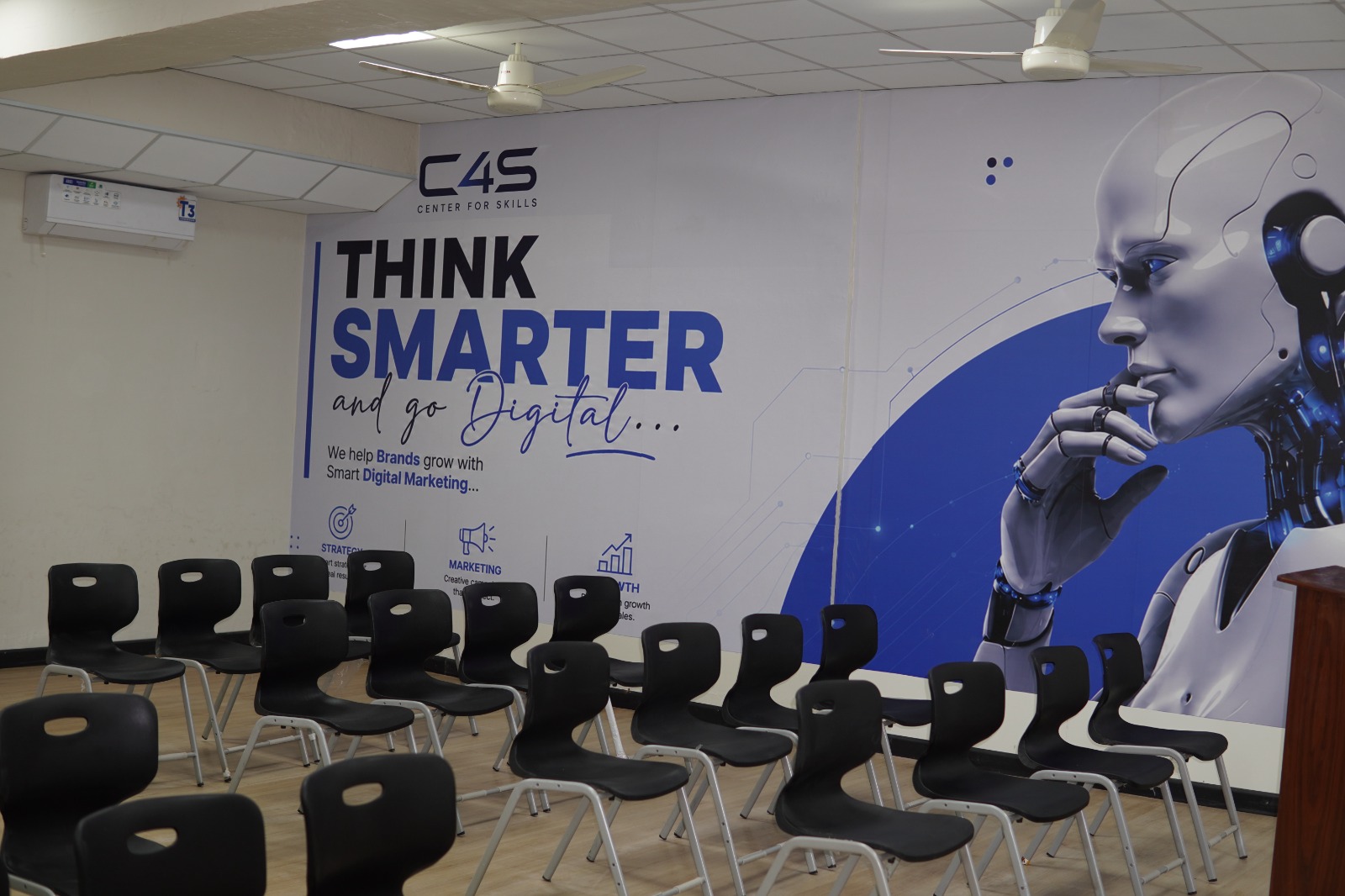
An on-campus IT course takes place at a physical institute. You attend scheduled sessions in a classroom, work in the same space as your trainer and classmates, and access labs and equipment on-site.
Both formats can lead to genuine skill development. What separates good from poor outcomes is not whether the course is online or on-campus. It is the quality of the curriculum, the trainer, the practical work, and the support available to students. Format matters less than content and structure.
Online IT Courses: What Works and What Doesn’t
Online courses work well for students who can manage their own time and don’t need constant in-person guidance. The main advantages are flexibility and access.
You can attend from home, from a cafe, or from anywhere with a stable internet connection. You don’t spend time or money commuting. For working professionals who can only study in evenings or on weekends, this matters a lot. For students in areas outside central Faisalabad, online access removes a genuine barrier.
Self-paced online courses let you move at your own speed. If you need to replay a lesson three times before it clicks, you can. If you already know something, you can skip ahead.
The limitations are also clear.
Online learning requires consistent self-discipline. Without a fixed schedule and a trainer present, it is easy to fall behind. Most students who start a self-paced online course do not finish it. This is not a character flaw. It is what happens when there is no structure, no accountability, and no one checking whether you are keeping up.
Direct interaction is limited. When you get stuck on a practical problem, you are either searching the internet on your own or waiting for an email reply. That delay slows learning, especially in technical fields where being stuck on one concept blocks everything that follows.
Technical issues add friction. A weak internet connection, a slow computer, or an unfamiliar software environment can all interrupt an online class in ways that never happen in a physical classroom.
Practical work can also be harder to do properly online. For fields that require specific tools, configured environments, or hands-on equipment, online courses vary widely in how well they manage this. Some do it well. Many don’t.
On-Campus IT Courses: What Works and What Doesn’t
On-campus courses work well for students who need structure, accountability and direct trainer access.
When you sit in a classroom with a trainer, you can ask a question and get an answer immediately. You can show your work and get feedback in real time. If you misunderstand something, the trainer can see it and correct it on the spot. That kind of responsive feedback is difficult to replicate online.
The physical environment also helps with discipline. You attend at a set time, you sit with other students, and you stay for the duration. This structure keeps many learners on track who would otherwise struggle to manage self-paced study on their own.
Practical work is easier to supervise in person. For lab-based IT skills, working in a properly configured classroom environment is simpler than setting up an equivalent at home.
The main limitations are schedule and location.
On-campus courses have fixed times. If the batch runs at hours that clash with your job or university, that can be a dealbreaker. You also need to travel to the institute, which takes time and adds cost.
Batch availability can also be a constraint. If a course runs twice a year and you miss the intake, you wait.
How Online and On-Campus IT Courses Compare
The differences between the two formats follow consistent patterns, though no single format wins across every category.
Online courses offer more flexibility on schedule and location. On-campus courses offer more direct trainer interaction and are generally easier for supervised practical work. Online learning puts more responsibility on the student to stay disciplined. On-campus learning provides more external structure.
For trainer interaction, online depends heavily on how the course is run. A live online class with an active trainer is significantly different from a library of pre-recorded videos with no feedback channel. On-campus interaction tends to be more consistent.
For practical work, both formats can work, but on-campus is usually easier to execute well for hands-on technical fields. Online works better when the skill is primarily software-based and students have access to the necessary tools at home.
For accessibility, online wins. Students who live further from an institute, have full-time jobs, or have family commitments that limit when they can travel will generally find online more manageable.
Which Learning Mode Works Better for Different IT Skills?
The format that works best varies depending on what you are learning. This is often overlooked in generic online-versus-on-campus comparisons.
AI
Tool-based AI learning can work well online, provided students actually practise with the tools rather than just watching demonstrations. The core challenge is ensuring hands-on use, which requires more self-discipline in an online setting. In a classroom, a trainer can watch you work and correct your approach directly.
SEO and Digital Marketing
Both formats can work for SEO and digital marketing because these skills are primarily software and internet-based. What matters more than format is whether the course includes real work: actual websites, real campaigns, genuine data to analyse. Feedback from a trainer on your work is more valuable than the mode of delivery.
Web Development
Web development can be learned online or on-campus, but the volume of hands-on coding practice required is high. Students need to write code, build projects and troubleshoot errors regularly. On-campus trainers can identify coding mistakes and misunderstandings faster. Online students need to be more proactive about getting feedback.
Graphic Design and Video Editing
Access to a capable computer and the relevant software matters more than the delivery mode. A student with a good machine and the right programs can learn graphic design effectively online. Without those tools, even an on-campus course is limited unless the institute provides equipment during sessions.
Cybersecurity
Cybersecurity benefits most from hands-on lab environments, instructor guidance and properly configured tools. The practical element of cybersecurity training is significant enough that the quality of labs and trainer support should be evaluated carefully regardless of format. A weak on-campus cybersecurity course is not automatically better than a well-structured online one, and vice versa.
Who Should Choose Online IT Courses?
Online IT courses are a better fit for students who have specific constraints or learning preferences that make on-campus study difficult.
Working professionals who can only study in the evenings or on weekends are well-suited to online learning. The ability to attend without commuting removes a major obstacle.
Students living outside central Faisalabad or in areas far from quality IT institutes can access better training online than they might find locally.
Self-directed learners who can stick to a study schedule, push through confusion independently, and regularly practise without being prompted will do well in a flexible online environment.
People who are already comfortable troubleshooting basic technical issues on their own are also better placed to handle the practical challenges of online learning.
Who Should Choose On-Campus IT Courses?
On-campus IT courses suit students who need structure, accountability and regular in-person interaction.
Complete beginners, especially those with no background in IT at all, tend to get more out of a classroom environment. Early confusion in a technical field is common, and having a trainer present to address it immediately prevents small misunderstandings from becoming long-term gaps.
Students who have struggled with online learning in the past and found that they fall behind without a fixed schedule are better served by an in-person setup.
Learners who need regular feedback on practical work, and who want someone to look at what they have built and tell them what to improve, will find on-campus training more responsive.
Students who are choosing IT training as a serious step toward employment or freelancing, and who want to build a portfolio with proper guidance, tend to get better support from a structured on-campus program.
What Should Faisalabad Students Check Before Enrolling?
Whether you choose online or on-campus, these are the questions to ask before paying for any IT course in Faisalabad.
Syllabus: What does the course actually cover, week by week? Ask for a written outline, not just a course title.
Trainer experience: Who will be teaching? What is their background in the field? A trainer’s experience matters more than a course’s marketing.
Practical projects: What will you build during the course? A portfolio built on real projects carries more weight than a certificate from a course with no practical work.
Class size: Smaller classes mean more individual attention. Ask how many students are typically in a batch.
Software and tool access: What tools will you work with? Will the institute provide access, or do you need to set things up yourself?
Feedback and support: How do trainers give feedback on student work? Is there support available between sessions when students get stuck?
Schedule: What are the class days and times? Can you consistently attend them?
Certification: What qualification does the course result in? If the course is affiliated with a nationally recognized body, you can verify the certification status through the relevant authority. NAVTTC-affiliated programs, for example, follow qualification standards you can check at navttc.gov.pk.
Total fee and what is included: Get a clear picture of what the fee covers. Ask whether software, materials or exam fees are included or extra.
IT Training at C4S Faisalabad
Center4Skills (C4S) is based on W Canal Road, Farooqabad Mansoorabad, Faisalabad. The institute offers practical, project-based training across six fields: AI, Cybersecurity and Ethical Hacking (CEH), Digital Marketing, SEO, Web Development, and Graphic Design and Video Editing.
C4S is designed for beginners and students who want to build real skills rather than accumulate passive theory. Courses emphasise tools, projects and portfolio work.
Whether you are considering online or on-campus training, the questions above apply equally. Ask about the syllabus, the trainer, the projects, the class size, the schedule, and what support is available. The C4S admissions team can walk you through the specifics of each course and help you understand which format and intake works for your situation.
To get in touch and ask about course details, contact C4S directly at center4skills.com/contact/.
Frequently Asked Questions
Is online or on-campus IT training better in Faisalabad?
Neither is automatically better. Online suits flexible, self-directed learners with scheduling constraints. On-campus suits beginners, students who need accountability, and learners who benefit from direct trainer feedback. The quality of the course matters more than the format.
Are online IT courses in Faisalabad worth it?
Yes, when the course includes a structured curriculum, practical assignments, regular feedback and a genuine opportunity to practise the skill. A self-paced video library with no interaction or feedback is not equivalent to a structured online course with live trainers.
What is the difference between online vs on-campus IT courses for beginners?
Beginners often benefit more from on-campus learning because they can ask questions immediately when they get stuck, receive in-person feedback on their work, and maintain a more structured schedule. Online learning for beginners requires strong self-discipline, which many students are still developing at the start of their training.
Which format is better for cybersecurity training?
For cybersecurity, prioritise the quality of practical labs, hands-on exercises and trainer support over the delivery mode. Whether online or on-campus, the key question is how much real, guided practical work the course includes.
Can I learn IT online while working full-time in Faisalabad?
Yes. Online IT courses that offer evening or weekend schedules can work well for working professionals. The critical factors are whether you can maintain consistent study habits and whether the course provides enough structure and support to keep you progressing.
If you are comparing training options in Faisalabad and want to understand how a specific C4S course is structured, reach out to the admissions team at center4skills.com/contact/.