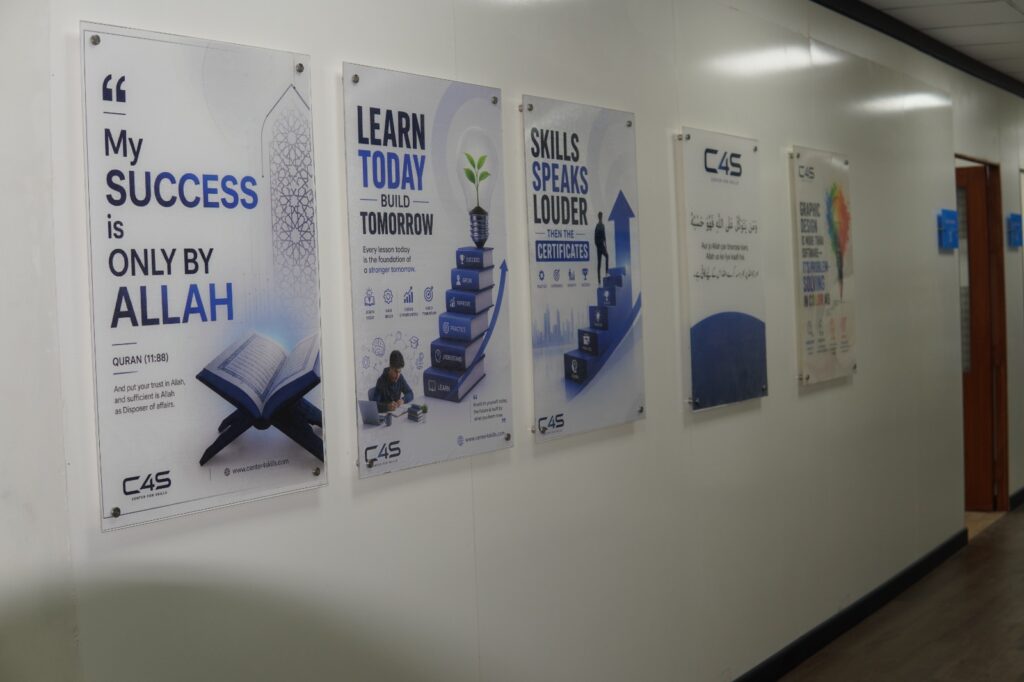

IT courses in Faisalabad run throughout the year, which means there is rarely one perfect month to start. The question students usually ask, whether to enroll now or wait for a better intake, has less to do with the calendar and more to do with whether the course schedule, batch timing and available practice time fit your current routine. This guide helps you think through that decision clearly.
Is There a Best Month to Start an IT Course?
There isn’t a single best month. The idea that you should wait for January, or hold off until after September, is based on how academic calendars work for degree programs. Short IT courses in Faisalabad don’t follow the same pattern. Many institutes run multiple batches across the year, and some start new groups monthly.
What matters more than the calendar is readiness. A batch that starts at the wrong point in your university semester, or during a period when your work schedule is heaviest, will be harder to complete than a batch that starts at the right time for your life, even if that second batch begins on a less conventional month.
If a relevant batch is available now and your schedule allows for consistent attendance and practice, that batch is almost certainly worth joining. If your schedule is genuinely too packed, waiting for the next intake is the more honest choice.
When Do IT Course Admissions Usually Open in Faisalabad?
IT course admissions in Faisalabad tend to cluster around a few common windows, though these vary by institute and course.
Early-year intakes in January and February are common. Students who finished their degree programs or professional exams toward the end of the previous year often enroll at this point.
Spring admissions in March and April are also standard, particularly for students coming out of mid-year assessments or university semester breaks.
Summer is one of the busiest intake periods. Students who have finished FSC, ICS, intermediate or university exams in May and June frequently spend the summer months adding a practical skill before continuing their studies or entering the job market. Some institutes in Faisalabad run dedicated summer batches to meet this demand.
Post-summer intakes in September and October align with the period after university re-enrollment. Students who have settled into their new semester sometimes find this a manageable time to add a part-time course.
For government-funded and NAVTTC-affiliated programs specifically, intake windows often depend on when a particular program is announced and how many seats are available. These programs don’t always follow a predictable seasonal pattern. You can check current funded program announcements at navttc.gov.pk to see what is open at any given time.
Not every institute in Faisalabad runs batches at all of these points. Some have fixed annual or biannual intakes. Others open new batches more frequently. The only reliable way to know what is available right now is to contact the institute directly.
Should You Start an IT Course After FSC, ICS or University Exams?
The period immediately after exams is one of the most practical times to start an IT course, but it depends on what comes next for you.
For students who have just completed FSC or ICS and are waiting for results or university admission, the gap between exams and the next stage of education is often underused. A short IT course in that window gives you something productive and useful, and you may have more unstructured time then than at any other point in your near future.
For university students coming out of a semester, the time between exams and the next semester starting is useful for a short course. But check whether the duration of the course actually fits inside that gap. A three-month course started two weeks before university begins again is a difficult commitment to honour.
For fresh graduates who are job-seeking, starting an IT course immediately after graduation is a good move. You have time to focus on building a skill and a portfolio without a competing academic workload.
For working professionals, the exam calendar is less relevant. What matters for them is finding a batch with an evening or weekend schedule that fits around their job.
The underlying principle in all of these cases is the same. Start when you have consistent time to attend sessions and practise between them, not just time to attend.
Morning, Evening or Weekend Batch: Which Should You Choose?
The right batch is the one you can actually attend consistently and still have time to practise what you are learning.
A morning batch suits students who have free mornings before university classes begin in the afternoon, or those who are not currently in education and can study during the day. Morning learners often report better focus and energy for technical work. The tradeoff is that you need your mornings to be genuinely free, which is not always the case.
An evening batch suits university students who attend morning classes and working professionals who finish work by late afternoon. Evening batches are the most common choice for people managing an IT course alongside other commitments. The risk is fatigue. If your day is already draining by the time the class begins, you need to be honest with yourself about how much you will actually absorb.
A weekend batch suits people whose weekdays are consistently too packed for additional study. Dedicating Saturday or Sunday to focused learning can be very effective because the time block is clearly separated from other commitments. The challenge is that weekend batches can be disrupted more easily by family obligations, travel or local events.
Before choosing, run through your week honestly. Block out university classes, work hours, commute time, rest and family time, and see which batch slot consistently has space. That is your answer.
Do not confirm a batch based on its general timing. Contact the institute, get the exact class days and hours, and check them against your actual weekly schedule before registering.
Should You Wait for the Next IT Course Intake? Sometimes yes. Sometimes the delay costs you more than the better timing is worth.
Waiting makes sense when the current batch clashes with university exams or a heavy semester. Attending a course during a period when you genuinely cannot practise or follow along properly does not produce learning. It produces attendance records and wasted fees.
Waiting also makes sense when you have not yet decided which skill to learn. Starting a cybersecurity course because the batch happened to be available, when you actually wanted to study digital marketing, is not a good use of your time or money. Spend a week or two testing free beginner resources across the fields you are considering and pick one deliberately.
Waiting does not make sense when the course fits your schedule and you simply feel uncertain. That kind of waiting is usually avoidance. If the timing works and the skill is one you have decided on, enroll.
Waiting does not make sense when you are treating a future intake as the moment you will finally be ready. That readiness does not arrive with a batch start date.
If a gap exists before the next intake, use it. Work through free beginner resources in your chosen field and arrive at the course with some familiarity rather than arriving cold.
How Much Time Should You Have Before Starting an IT Course?
Think about weekly hours rather than months of free time.
A short IT course typically involves two to four hours of class time per week. Progress depends on adding two to four additional hours of independent practice on top of that. Four to eight hours per week is a realistic minimum to produce genuine skill development rather than just attendance.
Map out your actual week before enrolling. If you consistently have four to eight hours available for the course and practice combined, you are ready. If those hours only exist in theory, wait for a period when they will be real.
Ask the institute how many total class hours the course involves, what the expected practice load is per week, and how previous students have managed it alongside other commitments.
Which IT Courses Can You Start in Faisalabad?
Practical IT training in Faisalabad covers a range of fields. Center4Skills (C4S) offers training in six areas: AI, Cybersecurity and Ethical Hacking (CEH), Digital Marketing, SEO, Web Development, and Graphic Design and Video Editing.
Each of these suits different types of learners and different career directions.
AI courses work well for students interested in automation, intelligent tools and how modern technology makes decisions. They tend to be tool-based and accessible for beginners who engage with the material actively.
Cybersecurity and Ethical Hacking is a lab-heavy field. It rewards students who are curious about how systems work and who put in consistent practice time outside class.
Digital Marketing is broad and immediately applicable. Students can apply what they learn to real business contexts relatively quickly, which makes it satisfying for action-oriented learners.
SEO is a focused skill that pairs well with digital marketing or web development. It is best learned through hands-on work with real websites.
Web Development requires consistent coding practice. Progress is directly proportional to how much time you spend writing and testing code outside of class hours.
Graphic Design and Video Editing is creative and tool-heavy. Access to a capable computer and the relevant software is important for making real progress.
What Should You Check Before Joining a New Batch?
These are the questions to ask before you pay the admission fee and commit to a batch.
Syllabus: Ask for a written course outline, not just a title. You need to know what is covered week by week.
Trainer background: Who will teach the course and what is their experience in the field? This matters more than the institute’s general reputation.
Class schedule: Get the exact days and times. Check them against your university timetable or work schedule for the entire duration of the course, not just the first week.
Course duration: How many weeks or months does the course run? How many total class hours does that involve?
Practical projects: What will you actually build during the course? A course that ends with a portfolio piece is more useful than one that ends only with a certificate.
Tools and software: What tools will the course use? Will the institute provide access to them, or will you need to install them yourself?
Certification: What qualification does the course result in? If it is affiliated with a recognised body, confirm that separately rather than taking the marketing material at face value.
Total fee and what is included: Get a clear breakdown of what the enrollment fee covers. Ask whether software, materials or any assessment fees are additional.
Batch size: A smaller class generally means more individual attention. Ask how many students are typically in a batch.
Make-up class policy: What happens if you miss a session due to university exams or illness? Some institutes offer recorded sessions or extra time. Others do not.
Career and portfolio support: Does the institute provide any guidance on applying what you have learned, or does the course end with the last class?
Starting an IT Course at C4S Faisalabad
Center4Skills (C4S) is based on W Canal Road, Farooqabad Mansoorabad, Faisalabad. The institute runs practical, project-based IT training in AI, Cybersecurity and Ethical Hacking (CEH), Digital Marketing, SEO, Web Development, and Graphic Design and Video Editing.
C4S is built for beginners. Courses focus on hands-on tools and projects rather than passive theory. Students are expected to practise between sessions and build work they can show.
Before enrolling, check the latest available batch with the C4S admissions team. Confirm the current class schedule, course duration and what is included in the program. Choose a batch whose timing genuinely fits your existing commitments.
To ask about current batch availability and admission details, contact C4S directly at center4skills.com/contact/.
Frequently Asked Questions
When is the best time to enroll in IT courses in Faisalabad?
There is no single best time. The right intake depends on your current academic schedule, available batch timings, the weekly hours you can commit to the course, and whether you have decided which skill to focus on. A batch that fits your routine is more valuable than one that starts in a conventionally popular month.
Do IT course batches in Faisalabad follow a fixed schedule?
Not always. Different institutes run batches at different points in the year. Some open new groups monthly. Others have fixed annual or biannual intakes. Contact the institute directly to find out what is currently available.
Can I start an IT course after FSC or ICS exams?
Yes. The period after FSC or ICS exams is one of the more practical times to start a short IT course, especially if you have a gap before university admission or the next stage of your studies begins. Check the course duration and confirm it fits your available window.
Should I wait for the next IT course intake?
Wait if the current batch genuinely clashes with university exams or your work schedule. Do not wait if the timing works and you have already decided on the skill you want to learn. Use any gap between now and the next batch to explore free beginner resources in your chosen field.
Are morning, evening and weekend IT course batches available in Faisalabad?
Availability varies by institute. Contact the admissions team directly and ask about current batch timings. Choose the schedule that fits your actual week rather than the one that sounds most convenient in theory.
Which IT course should a beginner start in Faisalabad?
The right course depends on your interests and career direction. AI, Cybersecurity and Ethical Hacking (CEH), Digital Marketing, SEO, Web Development, and Graphic Design and Video Editing each suit different types of learners. If you are unsure, spend a week with free beginner resources in two or three of these fields before committing to a paid course.
If you are ready to check what is currently available in Faisalabad, contact the C4S admissions team at center4skills.com/contact/ and ask about the next batch for the course that interests you.