A CCNA course in Faisalabad should prepare you for Cisco’s official 200-301 exam while building real, practical networking skills that actually translate into IT job opportunities. Too many people either overpay for training that’s mostly theory, or underprepare and end up paying for a retake they didn’t need to. Getting the cost and timeline expectations right from the start saves both money and frustration later. This guide covers the real exam cost, how long certification typically takes, what changed in the 2026 exam update, and honest job prospects afterward in Pakistan.
Quick Answer, What Does CCNA Certification Actually Cost and How Long Does It Take?
Cisco’s official CCNA 200-301 exam fee is 300 USD, separate from any local training cost, and most candidates spend a few weeks to a few months preparing depending on prior networking knowledge and daily study time.
That’s the honest, verifiable core of it. Everything else, how much local training costs, how fast you personally get through it, depends on your starting point and which institute you choose. The rest of this guide breaks cost, duration, and career outcomes down individually, so you’re not left guessing.
A lot of confusion online comes from people quoting outdated numbers or mixing up the exam fee with total training costs, which are two genuinely different expenses. Keeping these separate in your own budgeting makes the whole process much clearer.
What Is CCNA Certification, and Why Does It Matter in Faisalabad?
Cisco Certified Network Associate (CCNA) is Cisco’s entry-level networking certification, and it remains one of the most widely recognized credentials for IT and networking roles in Pakistan.
It’s been the standard starting point for networking careers for a long time now, and that hasn’t really changed even as newer certifications have come along. Local IT companies, telecom providers, and larger businesses running their own networks in Faisalabad still list CCNA specifically in job postings, which says a lot about how much weight it still carries. You can check current details directly on CISCO‘s official site.
Part of why CCNA has stayed relevant for so long is that it doesn’t just test memorized facts, it tests genuine, applied understanding of how networks actually behave. That practical grounding is exactly what employers are checking for when they list it as a requirement, not just the name of the certificate on a resume.
CCNA 200-301 Exam Cost, What to Expect
The official Cisco exam fee is 300 USD, and the final amount you pay at checkout will vary slightly based on currency conversion and local taxes.
This is one of the more stable numbers in this whole guide, since Cisco publishes it directly rather than leaving it to third parties to guess at. That said, don’t assume a fixed PKR number based on today’s exchange rate, since that shifts. The smart move is confirming the exact converted amount directly during Cisco’s official exam registration process, right before you actually book your test date, rather than budgeting off an estimate that might already be a bit off by the time you’re ready.
CCNA Training Cost in Faisalabad, Local Institute Fees Vary
Training or course fees charged by local institutes are separate from the Cisco exam fee itself, and they vary based on course length, hands-on lab access, and instructor experience.
This part genuinely differs from one institute to another, and there’s no honest way to quote a single number here. What’s more useful is knowing what to actually compare. Look at how much hands-on lab time you’ll get, whether Cisco Packet Tracer practice is built into the course or left for you to figure out alone, and how much real support you get from an instructor when you get stuck. A cheaper course that skips hands-on practice isn’t actually cheaper once you factor in how much longer it takes you to get exam-ready on your own.
It’s worth asking a few direct questions before enrolling anywhere. Ask exactly how many hours of hands-on lab time are included, not just lecture hours. Ask whether the course fee includes any exam preparation materials or practice tests. And confirm current pricing directly, since course fees do shift between batches and outdated numbers from an old post or a friend’s experience aren’t a reliable guide.
How Long Does CCNA Certification Take?
Most candidates spend roughly 100 to 150 hours preparing for the CCNA exam, which typically translates to a few weeks of intensive study or a few months of steady, part-time preparation.
Someone with zero networking background is going to need more of that 100 to 150 hours spent on fundamentals before the CCNA-specific material even starts making sense. Someone who already understands basic networking concepts can move through faster, since a chunk of that time is really about building comfort with terminology and concepts, not just memorizing exam answers. Pace matters more than any fixed timeline here.
Trying to rush this process usually backfires. Candidates who cram through the material quickly without real hands-on practice often pass the exam but struggle once they’re actually asked to configure a router or troubleshoot a real network issue on the job, since the exam and real-world application test slightly different things.
CCNA 200-301 v1.1, What’s New in 2026
Cisco updated the CCNA exam to version 200-301 v1.1 in 2026, adding new content on AI, cloud, and machine learning alongside the existing core networking fundamentals.
If you’re studying from materials written before this update, or comparing notes with someone who took the exam a couple of years ago, this matters. The core networking fundamentals, routing, switching, IP connectivity, haven’t gone anywhere, they’re still the backbone of the exam. What’s new is that Cisco has woven in content reflecting how AI and cloud infrastructure now intersect with traditional networking work, since that’s genuinely where the industry has been moving.
Core Skills Covered in CCNA Training
CCNA training covers the core skills needed to build, manage, and troubleshoot a network, hands-on, not just in theory.
This includes solid TCP/IP fundamentals, since nearly everything else in networking builds on understanding how data actually moves across a network. It covers Routing and Switching, the core mechanics of directing traffic between devices, along with VLAN configuration for properly segmenting a network. DNS and DHCP basics round this out, since these services are essential for how devices find each other and get assigned addresses. Hands-on practice typically happens through Cisco Packet Tracer for simulating network setups, and Wireshark for analyzing real network traffic.
These skills stay useful well beyond passing the exam itself. Whether you end up in a pure networking role or move into a broader IT position, comfort with TCP/IP, routing, and traffic analysis shows up constantly in day-to-day troubleshooting, regardless of which specific job title ends up on your business card.
CCNA Renewal, What Happens After 3 Years
CCNA certification is valid for 3 years, and renewal happens either by retaking a qualifying exam for another 300 USD, or by earning 30 Continuing Education credits through Cisco-approved training within that window.
The CE credit route tends to be the more cost-effective option for working professionals, especially if you’re already doing relevant training or attending Cisco-related events as part of your job. Instead of paying another 300 USD to sit the exam again, consistent professional development activities over the 3 years can renew your certification without that extra exam fee. It’s worth planning for this early rather than scrambling right before your certification expires.
Setting a simple reminder a year or two into your certification, rather than waiting until the deadline is close, gives you enough runway to spread out CE credit activities naturally instead of rushing to find qualifying training at the last minute.
Job Prospects After CCNA in Pakistan
CCNA holders commonly move into Network Engineer or Network Administrator roles, and the certification remains one of the most requested networking credentials in Pakistani IT job listings.
A Network Engineer typically focuses on designing and maintaining the actual network infrastructure, routers, switches, and connectivity between locations. A Network Administrator typically handles more of the day-to-day management side, keeping systems running smoothly and troubleshooting issues as they come up. Salaries genuinely vary based on experience, company size, and whether the role is local or tied to a larger, international operation, so it’s more useful to focus on building real, demonstrable skill than expecting a fixed number based on the certification alone.
Beyond these two common paths, CCNA also serves as a genuine stepping stone toward more advanced Cisco certifications like CCNP, which tend to open up higher-paying, more specialized networking roles down the line. Thinking of CCNA as the foundation of a longer career path, not the finish line, tends to shape better decisions about what to learn next.
CCNA vs CompTIA Network+, Which Should Beginners Start With?
CompTIA Network+ is often a cheaper, more vendor-neutral starting point, while CCNA is more specialized to Cisco environments and generally carries more weight for networking-focused roles.
Network+ covers broad networking concepts without being tied to one specific vendor’s equipment, which makes it a reasonable entry point if you’re not yet sure which direction you want to specialize in. CCNA goes deeper specifically into Cisco’s ecosystem, which dominates a lot of enterprise networking environments, so it tends to carry more weight once you know networking is genuinely the direction you want your career to go. Neither is the objectively correct starting point, it depends on how committed you already are to a networking-specific path.
How to Start Learning Networking Skills in Faisalabad
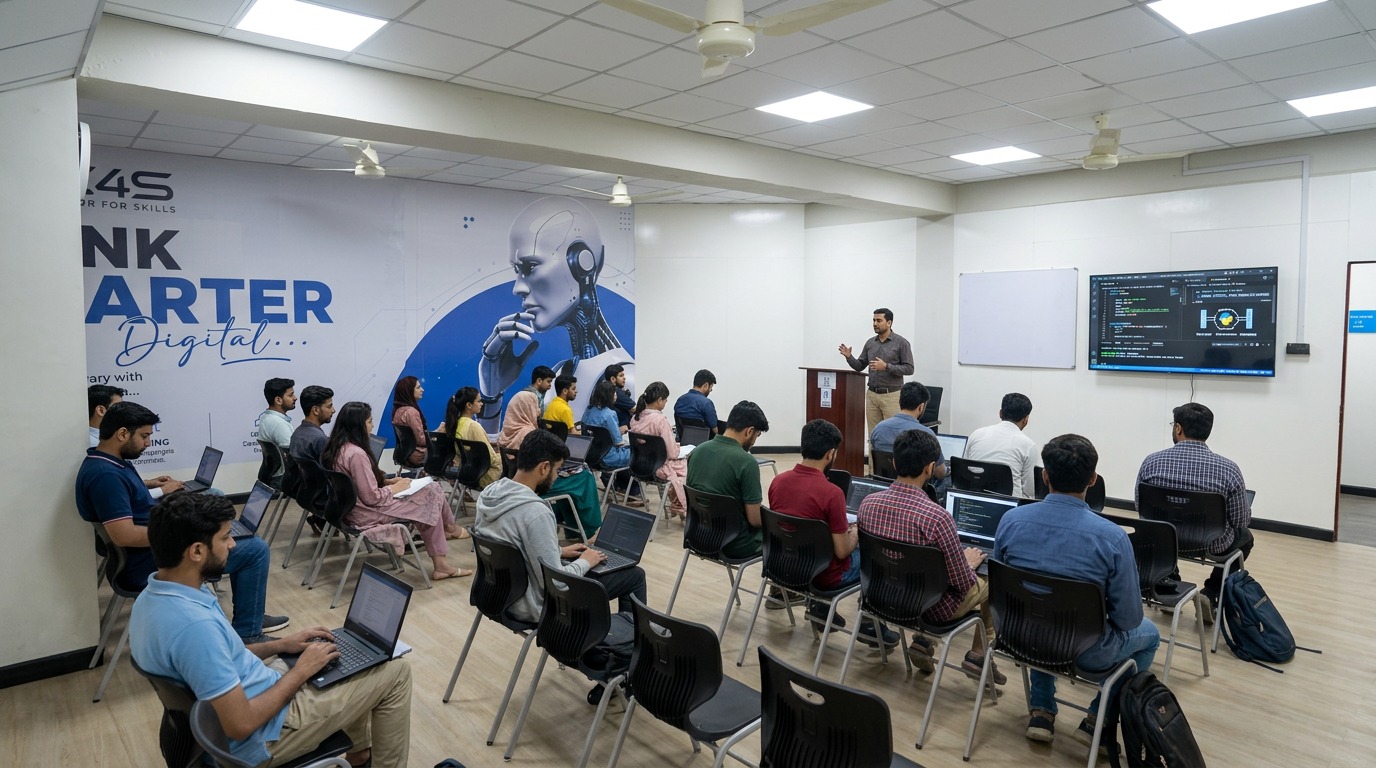
Structured, hands-on training builds real networking fundamentals faster than self-study alone, especially for a skill this hands-on, where understanding often clicks faster once you’re actually configuring something yourself.
Networking fundamentals overlap meaningfully with cybersecurity work too, and C4S’s cybersecurity and ethical hacking course covers TCP/IP and core networking concepts as part of its curriculum. You can browse the full training list to see current offerings, and if you’re specifically looking for CCNA-focused training, reaching out directly is the best way to check what’s currently available.
Frequently Asked Questions
How much does CCNA certification cost in total?
The official Cisco exam fee is 300 USD, plus separate local training costs that vary by institute, so the total depends on which training route you choose and current currency conversion.
How long does it take to prepare for the CCNA exam?
Most candidates spend roughly 100 to 150 hours preparing, which usually takes a few weeks of intensive study or a few months of steady, part-time preparation depending on prior networking knowledge.
What changed in the CCNA 2026 exam update?
Cisco updated the exam to version 200-301 v1.1, adding content on AI, cloud, and machine learning alongside the existing core networking fundamentals like routing and switching.
Is CCNA still worth it in 2026?
Yes, CCNA remains a widely recognized, actively used certification in Pakistan’s IT job market, and it’s still a strong entry point for anyone pursuing a networking career.
What jobs can I get after CCNA certification in Pakistan?
CCNA commonly leads to Network Engineer or Network Administrator roles, both of which remain in steady demand as businesses continue expanding their IT infrastructure.
Should I start with CompTIA Network+ or CCNA?
CompTIA Network+ works well if you’re still exploring networking broadly, while CCNA fits better once you’re confident networking is the specific career direction you want to pursue.
Where can I find a good CCNA course in Faisalabad?
A good CCNA course in Faisalabad should combine hands-on lab practice, current 200-301 v1.1 exam content, and instructor support, not just theory, so you finish genuinely ready for Cisco’s official exam.
Final Thoughts
CCNA certification combines a stable, known exam cost, 300 USD directly from Cisco, with real networking skills that connect to genuine job prospects in Pakistan. A CCNA course in Faisalabad works best when it prepares you for the actual 2026 exam content while giving you enough hands-on practice to walk into real network troubleshooting with confidence, not just pass a test and forget the material afterward. If you’re ready to start building practical networking and IT skills, reach out to Center 4 Skills (C4S) and figure out where to begin.