IT skills for the textile industry in Faisalabad have shifted fast, and employers in the city’s mills, export houses, and manufacturing units are now hiring for very different skills than they were even five years ago. If you walk into a mid-sized export office in Faisalabad today, you’ll see production dashboards, ERP logins, and international buyer emails, not just ledgers and phone calls. A lot of that shift happened quietly, without much fanfare, but it’s changed who gets hired and who gets left behind in this industry. This guide breaks down the top 10 IT skills currently in demand across this sector, why each one matters specifically for textile and export businesses, and how to actually start building them.
IT skills for the textile industry in Faisalabad have shifted fast, and employers in the city’s mills, export houses, and manufacturing units are now hiring for very different skills than they were even five years ago. If you walk into a mid-sized export office in Faisalabad today, you’ll see production dashboards, ERP logins, and international buyer emails, not just ledgers and phone calls. A lot of that shift happened quietly, without much fanfare, but it’s changed who gets hired and who gets left behind in this industry. This guide breaks down the top 10 IT skills currently in demand across this sector, why each one matters specifically for textile and export businesses, and how to actually start building them.
Why IT Skills Matter So Much in Faisalabad’s Textile Sector Right Now
Faisalabad’s textile and export businesses are digitizing faster than most people outside the industry realize. Production tracking, order management, and even client communication with overseas buyers now runs through software, not just phone calls and paper files.
This ties into what people call Industry 4.0, the shift toward connected, data-driven manufacturing. It’s not just a buzzword from a conference slide either. Local mills are adopting automation on the production floor, export houses are running everything through ERP systems, and buyers abroad expect fast, digital communication instead of waiting weeks for a fax or a phone call. Whether a business likes it or not, this shift is already happening, and the businesses hiring the right IT skills now are the ones staying ahead of it.
It’s also worth saying this plainly, since it’s easy to miss from the outside. This isn’t happening only at the big, well-known export groups. Mid-sized and even smaller family-run textile businesses in Faisalabad are picking up some version of these skills too, usually because a competitor already did and started winning business because of it.
1. Data Analytics, Excel, SQL, and Power BI
Data analytics skills, especially Microsoft Excel, SQL, and Microsoft Power BI, are some of the most requested skills in textile and export businesses right now, and it’s not close.
Here’s why. A textile business generates data constantly: production output, order status, inventory levels, export volumes, client payment timelines. Most of that data sits in spreadsheets nobody has time to properly analyze. Someone who can build a clean Excel model, write basic SQL queries to pull data from a system, or set up a Power BI dashboard that shows management exactly what’s happening at a glance becomes genuinely valuable, fast. This is one of those skills where you don’t need to be a data scientist; you just need to be better at it than everyone else in the office, which honestly isn’t that hard. If you’re exploring where to start with this, it’s worth checking C4S’s full training list directly, since course offerings in this space do shift with demand.
2. ERP Systems, SAP and Oracle Skills
ERP knowledge, particularly SAP and Oracle, is increasingly expected from office and management staff at larger textile and export operations.
An ERP system is basically the backbone connecting production, inventory, finance, and sales into one place, instead of five disconnected spreadsheets that never quite match up. Larger textile groups in Faisalabad have been adopting SAP or Oracle-based systems for years now, and knowing how to actually navigate and use these systems, not just click around blindly, makes someone far more employable at that level. Smaller businesses are catching up too, often with lighter, cheaper ERP tools, but the underlying skill, understanding how connected business systems work, transfers across all of them.
3. Artificial Intelligence (AI) for Manufacturing and Automation
AI is showing up in textile operations through demand forecasting, quality checks, and automating repetitive office tasks, and it’s a lot more practical than the AI hype you see online might suggest.
A textile business doesn’t need to build its own machine learning model. What it needs is someone who understands how to use existing AI tools to forecast seasonal demand more accurately, flag quality issues in production faster, or automate the repetitive reporting that used to eat up someone’s entire afternoon. This is exactly the kind of practical, tool-focused AI skill that’s becoming genuinely useful in local operations. C4S runs a beginner-friendly AI course built around this kind of real, applied use, not theory.
4. Cybersecurity
As textile and export businesses digitize more of their operations, cybersecurity has become a real, practical hiring need, not something that only big banks worry about.
Think about what’s actually online now for a typical export house: client communication, export documentation, payment records, ERP logins, sometimes production system access too. All of that is worth protecting, and a lot of local businesses genuinely haven’t thought hard about it yet, which makes this an area with real, immediate demand once a business does start paying attention. C4S’s cybersecurity and ethical hacking course covers exactly the kind of hands-on skills that apply here.
5. Cloud Computing
Cloud computing skills are growing in demand as textile businesses move production tracking, inventory, and communication systems off local servers and onto cloud platforms.
The reason this shift is happening is pretty practical. Local servers break, need maintenance, and cost money to run and secure properly. Cloud platforms solve a lot of that, and they also make it easier for a business with multiple offices, say a Faisalabad production unit and a Karachi sales office, to actually work off the same, real-time data. This is still an emerging skill area locally, so if it interests you specifically, it’s worth asking C4S directly what’s currently available in this space rather than assuming a fixed course structure.
6. Digital Marketing for Exporters
Digital marketing has become essential for export businesses trying to reach international buyers directly instead of relying only on trade shows and agents.
International buyers now research suppliers online before ever picking up the phone. An export business without a real digital presence- meaning active social media, decent paid ad campaigns, and a clear online story about what they make and export- is genuinely losing potential clients to competitors who show up better in search results and social feeds. This isn’t optional marketing fluff anymore; it’s part of how modern export sales actually happen. C4S’s digital marketing course is built around exactly this kind of practical, business-focused approach.
7. SEO for Export Businesses
SEO helps export businesses get found by international buyers searching online for suppliers, which matters more every year as sourcing moves digital.
A buyer in Europe or the US searching for “cotton fabric supplier Pakistan” should ideally find your business, not just your competitor three cities over. That’s what SEO actually does here; it’s not abstract- it’s the difference between showing up on page one or getting ignored entirely. This is a more specialized, patient skill compared to general digital marketing, but for export businesses specifically, it can be one of the highest-value skills on this whole list. C4S also offers a dedicated SEO course for anyone who wants to go deep on this.
8. Web Development
A strong, professional website has become a basic expectation for export businesses, since international buyers often check online before ever making contact.
A slow, outdated, or badly designed website actively hurts credibility with overseas clients who are comparing several suppliers at once. Someone who can build and maintain a proper business website, not just a basic template, brings real value to an export business trying to look as trustworthy online as it is in person. C4S’s web development course is structured around building real, working sites, not just theory.
9. Networking and Cisco CCNA
As textile operations grow more connected, from office networks to production floor systems, networking skills like CCNA are becoming genuinely useful hires, not just an IT department afterthought.
A mill running networked production equipment, connected inventory systems, and multiple office locations needs someone who actually understands how to keep that network running reliably. This overlaps a fair bit with core networking fundamentals covered in cybersecurity training too, so it’s worth exploring both together if this direction interests you, rather than treating them as completely separate paths.
10. Python for Automation and Data Work
Python is showing up more in textile and export operations for automating repetitive reporting tasks and handling larger data sets than Excel can comfortably manage.
Once a business’s data gets big enough, order histories spanning years, production logs across multiple lines, Excel starts to strain. Python fills that gap, and it’s also genuinely beginner-friendly compared to a lot of other programming languages. This is another emerging skill area worth asking C4S about directly, since it pairs well with the data analytics and automation work businesses are increasingly asking for.
How These Skills Connect to Faisalabad’s Export Growth
Faisalabad’s export sector depends heavily on international trust and speed, and IT skills are what make both possible at scale.
An overseas buyer isn’t just judging fabric quality anymore; they’re judging how fast you respond, how professional your documentation looks, and how easy it is to actually do business with you online. The Trade Development Authority of Pakistan (TDAP) exists specifically to support and grow this kind of export activity, and a lot of the digital tools it promotes for exporters, from online certificate processing to market access support, only work well if the businesses using them actually have people with the right IT skills on staff.
How to Start Building These IT Skills in Faisalabad
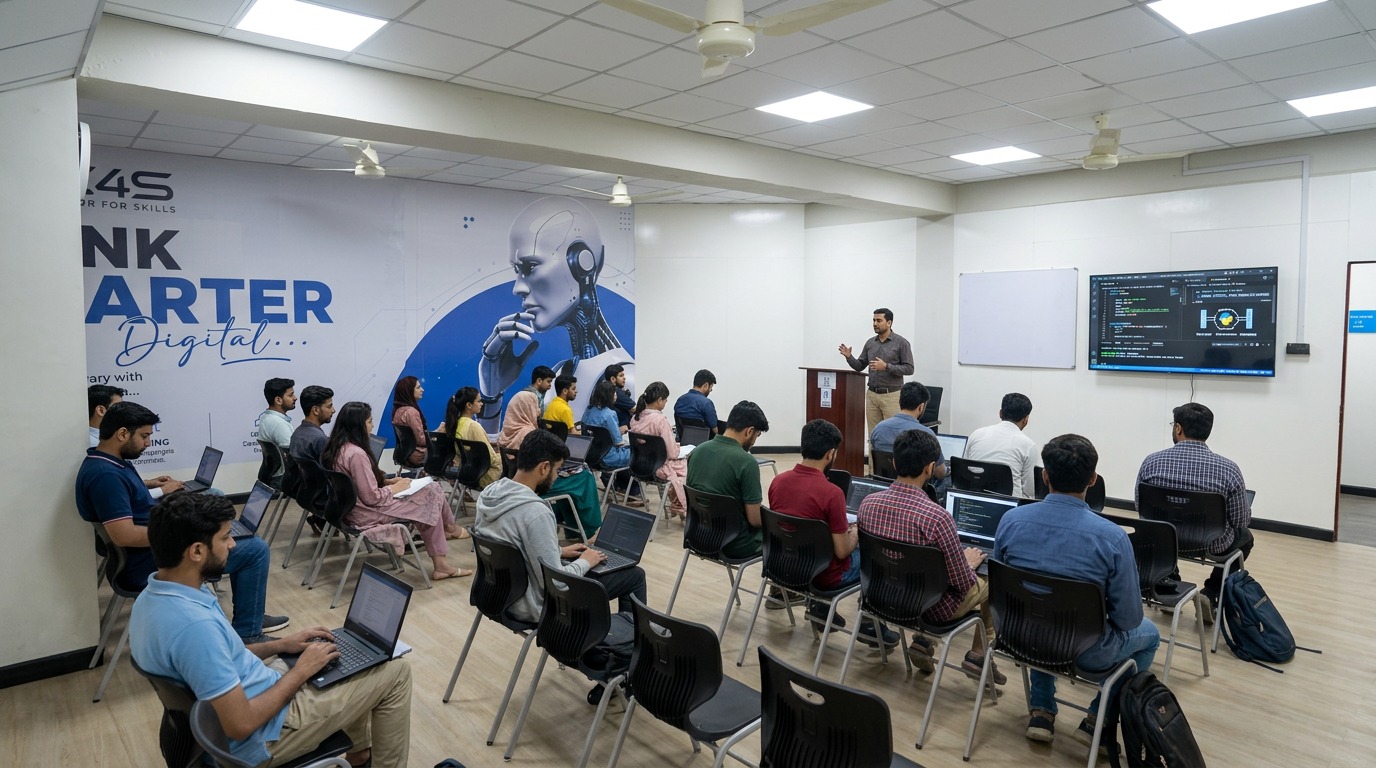
The fastest way to build relevant IT skills is structured, hands-on training tied to real business use cases, not generic online tutorials that never quite connect to how local businesses actually operate.
If any of the skills above stood out to you, the best next step is to look through C4S’s full training list, check the class schedule to see what fits your timeline, and reach out directly if you want to ask about a specific skill, like ERP, data analytics, or networking, that isn’t listed as its own dedicated course yet.
Frequently Asked Questions
What IT skills are most in demand in Faisalabad’s textile industry?
Data analytics, ERP systems, AI for automation, cybersecurity, and digital marketing are among the most in-demand IT skills right now, since they directly support production efficiency and export growth.
Do textile companies in Faisalabad actually hire for AI and data skills?
Yes, larger textile and export operations increasingly hire for practical AI and data analytics skills, mainly for demand forecasting, quality checks, and turning production data into useful reports.
Is cybersecurity relevant for smaller textile businesses too?
Yes, even smaller businesses now handle client data, export documents, and payment systems online, which makes basic cybersecurity awareness and skills increasingly relevant, not just for large companies.
Which IT skill is easiest for a beginner to start with?
Data analytics using Excel and digital marketing are usually the easiest starting points, since they build on skills many students already have some familiarity with before specializing further.
Do export businesses in Faisalabad need digital marketing and SEO?
Yes, since international buyers increasingly research and find suppliers online, a business without digital marketing and SEO presence risks losing potential clients to competitors who show up better in search results.
Can someone with no textile background learn these IT skills?
Yes, none of these IT skills require a textile background specifically. They are general, transferable IT skills that happen to apply especially well to how textile and export businesses operate.
IT skills for textile industry in Faisalabad: which ones matter most right now?
Data analytics, ERP systems, AI for automation, cybersecurity, and digital marketing are the IT skills for the textile industry in Faisalabad that employers ask for most, since they directly support production efficiency and export growth.
Final Thoughts
Faisalabad’s textile and export businesses now compete on IT skills as much as production capacity, and the 10 skills covered here give a clear starting map for anyone looking to build a career in this space. Whether it’s data analytics, AI, cybersecurity, or digital marketing, the businesses hiring these skills today are the ones planning to stay competitive tomorrow. If you’re ready to start building any of these IT skills for the textile industry in Faisalabad, reach out to Center 4 Skills (C4S) and figure out where to begin.