A good Python course in Pakistan should do more than teach syntax, it should connect directly to real jobs in web development, data analytics, AI, and automation. A lot of beginners learn the basics of Python and then get stuck wondering what to actually do with it next, which is honestly the most common gap in self-taught learning. They finish a course, know how to write a loop and a function, and then have no clear idea which direction actually leads to paid work. This guide covers why Python is such a popular starting language, a practical roadmap for beginners, the tools you’ll need, and a specific breakdown of the jobs Python skills actually lead to.
Why Python Is a Popular First Language in Pakistan
Python is one of the most beginner-friendly programming languages, with simple, readable syntax that doesn’t overwhelm someone with zero coding background.
Unlike some languages that bury you in complicated symbols and rules before you can write anything useful, Python reads almost like plain English. This makes the first few weeks of learning far less discouraging, which matters a lot for beginners who quit early because the learning curve feels too steep. This growth in programming interest fits into a bigger picture too, and the Ministry of Information Technology and Telecommunication has been actively pushing Pakistan’s broader digital economy for years now, with programming skills sitting right at the center of that push.
There’s also a practical reason instructors keep recommending Python specifically for beginners. The gap between “I just started learning” and “I built something that actually works” is shorter with Python than with most other languages, and that early sense of progress is often what keeps a beginner motivated long enough to get genuinely good at it.
What Is Python Actually Used For?
Python is used across web development, data analytics, artificial intelligence, and automation, which is exactly why it opens up so many different career directions from one starting language, unlike more narrowly focused languages.
This versatility is honestly the biggest reason Python has become so popular. You can build a website backend with it, analyze a company’s sales data with it, train a machine learning model with it, or write a script that automates a boring, repetitive task at work. You can check the language’s own documentation and background directly on Python’s official site. The specific jobs section further down breaks each of these directions down in more detail.
Python Roadmap for Complete Beginners
A realistic Python roadmap starts with core syntax and small practice projects, then moves into intermediate concepts, before branching into a specialization.
Start with the basics, variables, loops, conditionals, and functions, and don’t rush past this stage even if it feels slow. Once that’s comfortable, build a handful of small, complete projects, nothing fancy, just enough to prove you can actually apply what you’ve learned instead of just recognizing it in a tutorial. From there, move into intermediate concepts like working with files, handling errors properly, and understanding how to structure a slightly bigger program. The final stage is picking a direction, web development, data, AI, or automation, and going deeper specifically in that area, since trying to be equally advanced in all four at once usually slows people down rather than helping them.
Most beginners underestimate how much time the “small, complete projects” stage actually needs. It’s tempting to rush through this part and jump straight to something advanced, but skipping it usually shows up later as shaky fundamentals that slow down everything that follows.
Jobs You Can Get After Learning Python
Python skills lead to a genuinely wide range of jobs, and which one fits depends on which direction you specialize in after the fundamentals.
Python Web Developer
Python web developers build the backend, the part of a website users don’t see, using frameworks like Django, Flask, or FastAPI.
Django is the most common starting point for larger, more structured projects, since it comes with a lot of built-in tools already set up. Flask is lighter and more flexible, often preferred for smaller projects or when a developer wants more control over how things are built. FastAPI has grown quickly in popularity too, especially for building fast, modern APIs. A junior Python web developer role typically involves working alongside a front-end developer, building the logic and database connections that power the actual site.
Data Analyst or Data Scientist
Python plays a central role in data work through libraries like Pandas and NumPy, which handle the actual cleaning, organizing, and analyzing of data.
Alongside Python itself, SQL knowledge matters a lot here, since real business data usually lives in a database like PostgreSQL or MySQL, not a spreadsheet someone exported manually. A data analyst role focuses more on turning that data into clear business reports and insights, while a data scientist role goes deeper into statistical analysis and predictive modeling. Both paths share the same Python foundation, they just branch in different directions from there.
This is one of the more accessible entry points into Python-based work, since a lot of the early skill overlaps with things beginners already understand intuitively, like organizing information and spotting patterns, just expressed through code instead of a spreadsheet.
AI and Machine Learning Roles
Python is the standard language for AI and Machine Learning work, which is a big reason it’s become such a widely learned language over the past several years.
This path usually builds directly on strong data fundamentals first, since machine learning is essentially data analysis taken a few steps further, teaching a system to recognize patterns and make predictions rather than just reporting what already happened. Jumping straight into AI without solid Python and data basics first tends to leave big, confusing gaps, so this is genuinely a “build the foundation first” kind of specialization.
Automation and Scripting Roles
Python is widely used for automating repetitive business tasks, a practical, in-demand skill that doesn’t require deep AI or web development knowledge to be genuinely useful.
Think of tasks like automatically renaming and organizing hundreds of files, pulling data from multiple sources into one report, or scheduling a script to run a routine task every night without anyone manually doing it. This is one of the more underrated Python paths, since it applies to almost any business with repetitive digital work, and it’s often faster to learn well than the other specializations.
Freelance Python Work
Freelancing with Python becomes realistic once a beginner has a couple of solid, complete projects to show, rather than just a list of concepts they’ve studied.
Automation scripts, small web applications, and basic data analysis projects are all common freelance requests, especially from small businesses that need something specific built without hiring a full-time developer. As with most freelance work, a working project you can point to matters far more than certificates alone when it comes to actually landing your first few clients.
Tools Every Python Beginner Should Know
Beyond the language itself, a handful of tools show up constantly in real Python work, and getting comfortable with them early saves a lot of confusion later.
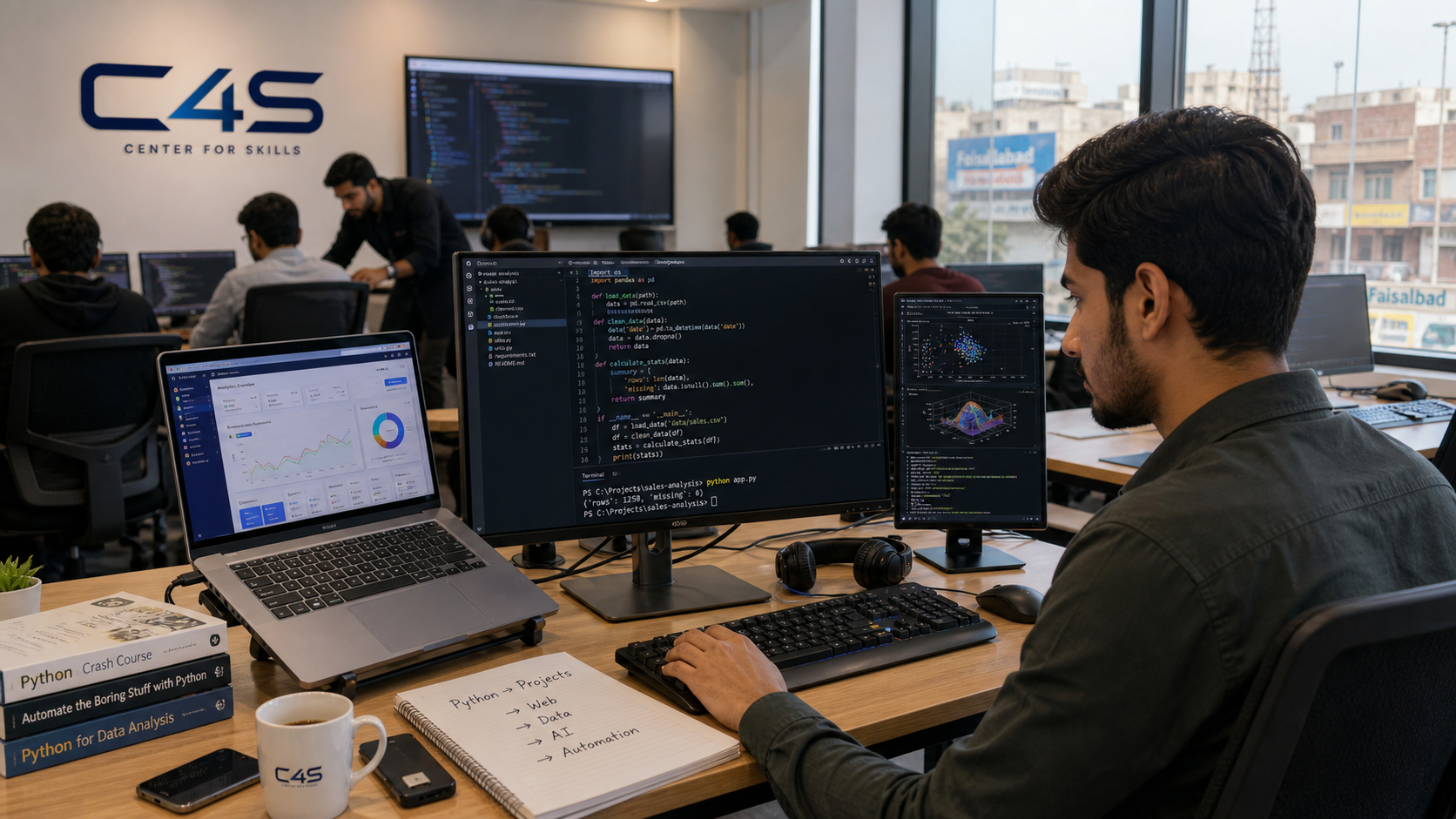
Visual Studio Code and PyCharm are the two most common code editors, both free to use, with PyCharm built specifically for Python and VS Code being more general-purpose but widely customizable. Jupyter Notebook is worth learning specifically if you’re heading toward data or AI work, since it lets you run and test code in small, visual chunks, which fits that kind of exploratory work well. Git and GitHub matter the moment you’re doing anything beyond solo practice, since they let you track changes to your code and collaborate with others, or simply show a portfolio of projects to a potential employer or client.
Python Developer Salary Expectations in Pakistan
Salaries for Python-related roles vary widely based on specialization, experience, and whether the work is local or international, so there’s genuinely no single number worth quoting here.
Entry-level roles, especially in web development or basic automation work, typically start lower while a developer builds speed and confidence with real projects. As experience grows, particularly in higher-demand specializations like data science or AI, pay tends to increase noticeably. Remote and freelance work with international clients often pays more than local-only positions too, mainly because global demand for strong Python skills remains consistently high. Rather than chasing a specific number early on, it’s more useful to focus on building genuine project experience, since that’s what actually drives better offers over time.
Common Beginner Projects to Practice Python
Building small, real projects matters more for actually learning Python than finishing tutorial after tutorial without ever applying anything independently.
A simple to-do list app is a classic starting project, since it touches on basic logic, data storage, and user input all at once. A basic web scraper, pulling information from a public webpage, teaches practical, real-world Python use beyond just textbook exercises. A small data analysis project using a free public dataset, calculating averages, spotting trends, making a simple chart, builds genuine confidence with Pandas and NumPy. None of these need to be impressive, they just need to be finished and understood, not copied from a tutorial without really knowing why each part works. Finishing three small projects teaches more than starting ten and abandoning them halfway through.
How to Start Learning Python in Faisalabad
Structured, hands-on training helps beginners avoid the common trap of tutorial-hopping without ever building real projects, which is where a lot of self-taught learners get stuck.
Python skills overlap closely with a couple of C4S’s existing courses. The AI course covers practical, applied skills that connect directly to data and automation work built on Python. The web development course covers backend frameworks like Django and Flask as part of full-stack training. You can browse the full training list to see what fits your goals, and reach out directly if you have specific questions about Python-focused learning options.
Frequently Asked Questions
Is Python a good first programming language to learn in Pakistan?
Yes, Python is widely considered one of the best first languages, since its simple, readable syntax makes it easier for complete beginners to stay motivated and actually finish learning it.
What jobs can I get after learning Python?
Python skills open up roles in web development, data analysis, AI and machine learning, and automation, with the specific job depending on which direction you specialize in after learning the fundamentals.
Do I need a computer science degree to get a Python job?
No, a computer science degree is not required. Employers and clients generally care more about a working portfolio of real Python projects than formal academic credentials.
How long does it take to learn Python well enough to get hired?
With consistent practice, most beginners can reach a hireable, junior level within a few months, though this varies based on how much time is dedicated daily and which specialization is chosen.
Is Python better for web development or data analytics?
Neither is objectively better, they suit different interests. Web development fits people who enjoy building complete applications, while data analytics fits people who enjoy working with numbers and finding patterns.
Can I freelance using Python skills?
Yes, freelancing with Python is realistic once you have a couple of solid, finished projects to show, especially for automation scripts and small data analysis or web development tasks.
Where can I find a good Python course in Pakistan?
A good Python course in Pakistan should combine hands-on practice with real, applied skills like data work or web development, not just syntax lessons, since that’s what actually leads to jobs afterward.
Final Thoughts
Python for beginners in Pakistan opens up a genuinely wide range of career paths, from web development to data analytics to AI and automation, and the right one depends on what direction you choose to specialize in after building the fundamentals. What matters most early on is consistent practice and real, finished projects, not chasing every specialization at once or trying to look advanced too soon. If you’re ready to start building practical, job-ready Python-adjacent skills, reach out to Center 4 Skills (C4S) and figure out where to begin.