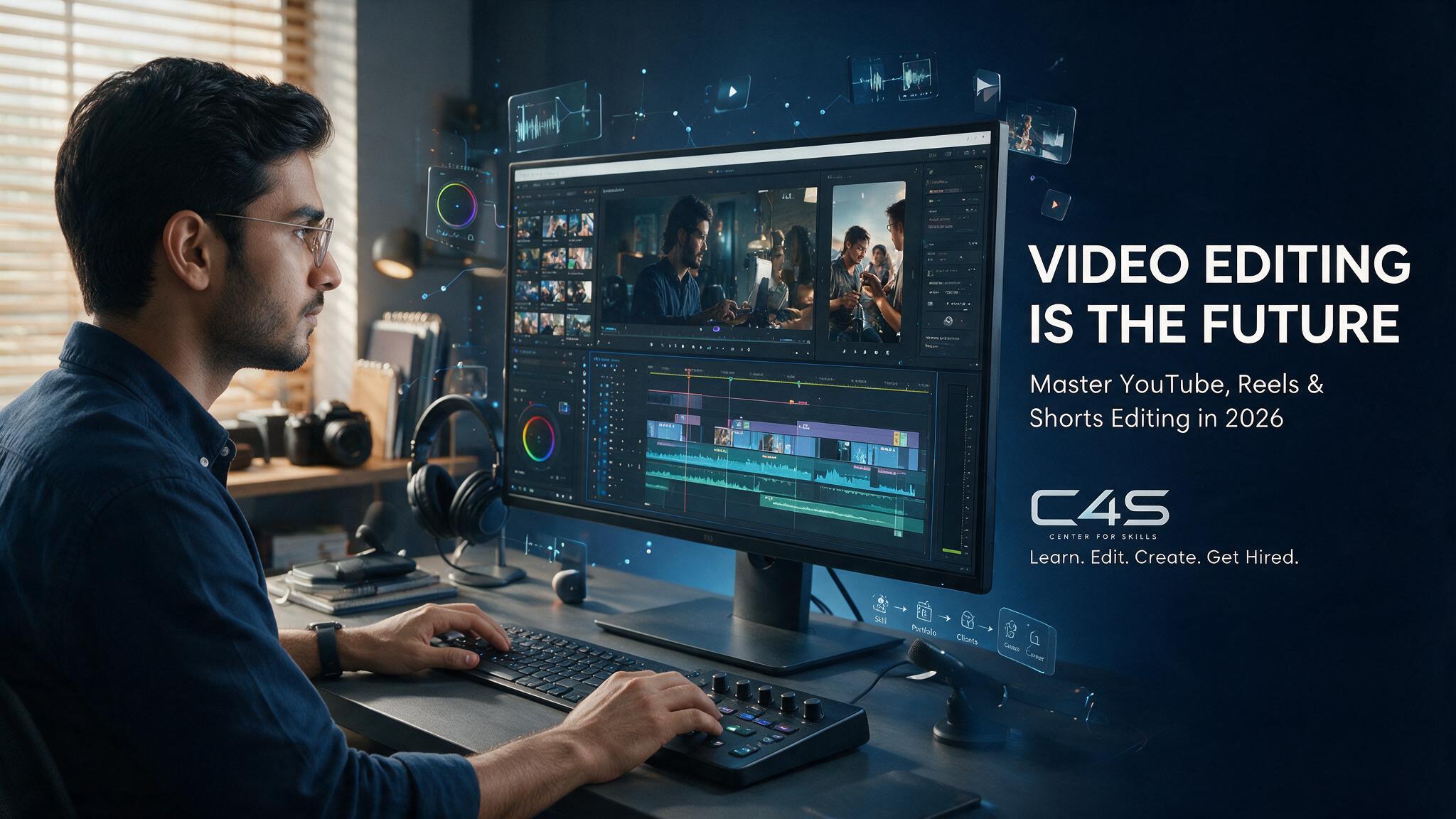
A good video editing course in Faisalabad should prepare you for both long-form YouTube content and fast-paced short-form video like Reels and Shorts, since these are genuinely different editing skills, not the same thing applied to different platforms. A lot of beginners assume editing is editing, and once you know one format you know them all. That’s not quite true, and understanding why early saves a lot of confusion later, since jumping between the two without adjusting your approach usually shows in the finished result. This guide covers the tools, techniques, and portfolio-building steps needed to become a genuinely hireable video editor in 2026.
Why Video Editing Skills Are in High Demand in Faisalabad Right Now
Demand for video editors has grown fast as more local businesses, creators, and small brands invest in YouTube and short-form video content.
A few years ago, most small businesses in Faisalabad relied purely on word of mouth or basic social media posts. Now, more of them are building actual video presence, product demos, behind-the-scenes content, short promotional clips, and someone has to edit all of it. This fits into a bigger picture too, Pakistan’s digital economy has been growing steadily, and the Ministry of Information Technology and Telecommunication has been actively supporting that shift for years now. More content being produced locally means more demand for people who can actually edit it well.
This demand isn’t limited to big brands or established creators either. Small business owners, local influencers, and even students building a personal brand all need someone who can turn raw footage into something worth watching, and that broad demand is exactly why editing skills translate into so many different kinds of work.
YouTube vs Reels vs TikTok, Different Editing Needs
Long-form YouTube editing and short-form Reels or TikTok editing require genuinely different pacing, structure, and storytelling approaches, not just a shorter version of the same edit.
YouTube rewards pacing that holds attention over several minutes, building context, developing a point, giving a viewer time to actually settle into the content. Short-form rewards something almost the opposite, an immediate hook and fast, punchy cuts within the first few seconds, since a viewer scrolling Reels or TikTok decides whether to keep watching almost instantly. An editor who’s only ever cut long-form YouTube videos often struggles the first few times they try short-form work, since the entire rhythm of the edit needs to change, not just the length.
This distinction matters for how you should actually practice too. Watching a handful of successful long-form videos and a handful of successful Reels side by side, paying attention specifically to pacing and structure rather than content, makes this difference far more obvious than reading about it in theory ever will.
Core Video Editing Software You Need to Know
A solid video editor should be comfortable with at least one professional editing tool and one fast, mobile-friendly tool for short-form work.
Adobe Premiere Pro remains the industry-standard professional editor, widely used across YouTube, agency, and freelance work. DaVinci Resolve is a powerful alternative, particularly known for its strong color grading tools, and it’s become popular partly because it offers a genuinely capable free version. CapCut has become the fast, popular choice for short-form mobile editing, since it’s built specifically around the quick, template-driven style that suits Reels and TikTok content. Final Cut Pro remains common specifically within Apple-based workflows, especially for editors already working on Mac.
You don’t need to master all four at once, and trying to usually slows beginners down. A reasonable starting approach is picking one full editing suite, Premiere Pro or DaVinci Resolve, to build genuine core skills, then adding CapCut specifically once short-form work becomes part of your workload.
Motion Graphics with After Effects
Motion graphics add a professional polish, animated titles, transitions, effects, that separates a good edit from a great one.
Adobe After Effects is the standard tool for this kind of work, and even basic motion graphics skill noticeably raises the perceived production quality of a video. A simple animated title card or a clean transition effect can make a video feel far more polished than the raw footage alone would suggest, which is exactly why clients notice and value this skill once an editor has it.
This is often a skill worth adding after core editing feels comfortable, rather than trying to learn everything at once. A beginner who can cut a clean, well-paced video reliably is more hireable than one who knows flashy motion graphics but struggles with basic pacing and structure.
Color Grading, Making Your Footage Look Professional
Color grading is what gives a video its consistent, polished look, and it’s a skill that separates amateur footage from professional-looking content.
Raw, unedited footage from different cameras or lighting conditions often looks inconsistent, slightly different tones, mismatched brightness, an overall flat appearance. Color grading fixes this, giving a video a consistent visual mood from start to finish. DaVinci Resolve is particularly well known for this specific skill, since color grading was actually its original core strength before it grew into a full editing suite.
Audio Editing Basics with Adobe Audition
Clean, clear audio matters as much as good visuals, since viewers tolerate mediocre video far more than they tolerate bad sound.
A slightly shaky camera shot rarely makes someone stop watching. Muffled, echoey, or inconsistent audio does, almost immediately. Adobe Audition is built specifically for cleaning up background noise, balancing volume levels between clips, and polishing voiceovers, and even basic comfort with it noticeably improves the overall quality of a finished video.
Storytelling and Pacing, The Skill Software Can’t Teach
Knowing the software matters less than understanding pacing, structure, and how to hold someone’s attention, which no tool teaches on its own.
This is genuinely the hardest skill to develop, and honestly, it’s the one that actually separates editors clients keep hiring from ones they don’t. Two editors can know Premiere Pro equally well and produce completely different results, because one understands when to cut, when to let a moment breathe, and how to build a sequence that actually keeps someone watching. This comes from practice and paying close attention to why certain edits feel right and others feel off, not from mastering another keyboard shortcut.
A useful habit here is watching your own edits back critically, and asking honestly where attention would actually drop off if you were a stranger seeing this for the first time. That kind of honest self-review, uncomfortable as it can feel, builds pacing judgment faster than almost anything else.
Editing for YouTube Shorts and Instagram Reels Specifically
Short-form editing has its own specific techniques, a strong hook in the first 1 to 3 seconds, vertical framing, fast cuts, and on-screen captions that work with sound off.
The opening seconds decide almost everything for short-form content, since a weak start means most viewers simply scroll past before the actual content even gets going. Vertical framing needs to be considered from the start, not added as an afterthought to horizontal footage. Fast, frequent cuts keep energy up throughout a short clip, and captions matter more than people expect, since a huge share of viewers watch with sound off, especially in public or while scrolling casually.
Trends and formats shift constantly in short-form video too, a specific transition style or caption trend that works well one month might feel dated a few months later. Staying reasonably current with what’s actually performing well right now, rather than relying purely on techniques learned once and never revisited, matters more here than in longer-form editing.
Building a Video Editing Portfolio for Faisalabad Clients
A strong portfolio comes from editing real or practice footage into finished, polished pieces, not from listing software names on a resume.
A few practical starting points work well here. Offer to edit a friend’s event footage, a wedding clip, a small celebration, into something polished. Create sample Reels for a local business, with their permission, showing you understand short-form pacing specifically. Or take existing long-form content, your own or someone else’s with permission, and repurpose it into short clips, which shows you understand both formats and how they connect.
Two or three genuinely polished pieces, covering both a long-form and a short-form example, prove far more than a dozen rushed clips ever could. A potential client scanning a portfolio decides quickly whether the quality matches what they need, so it’s worth spending real time perfecting a handful of pieces rather than rushing through many mediocre ones.
Video Editing Career Paths in Pakistan
Video editors in Pakistan find work through freelance platforms, in-house roles with content creators or agencies, and direct work with local businesses building their own video presence.
Freelance platforms connect editors with a wide range of clients needing everything from quick social clips to full YouTube video edits. In-house roles with growing content creators or small media agencies offer more consistent, ongoing work. Local businesses increasingly hire editors directly too, especially ones wanting regular social media content without managing a freelancer relationship for every single video. Income varies based on speed, quality, and specialization, so it’s more useful to focus on building genuine editing skill than expecting a fixed number tied to any one path.
Editors who can comfortably handle both long-form and short-form work tend to have an easier time finding steady work, since they’re not limited to only one type of client project. This flexibility becomes especially valuable when working with growing creators or small businesses who need a mix of both formats regularly.
How to Start Learning Video Editing in Faisalabad
Structured, hands-on training builds real editing speed and judgment faster than scattered tutorials alone, since a real course corrects mistakes early instead of letting bad habits set in.
If you’re ready to start, C4S’s graphic design and video editing course covers both design and editing skills together, built around real, finished projects rather than isolated exercises. You can check the class schedule to plan your start date, or reach out directly if you have questions before enrolling.
Frequently Asked Questions
Which video editing software should a beginner learn first?
Most beginners start with Adobe Premiere Pro or DaVinci Resolve for core editing skills, then add CapCut for faster, short-form specific work once the fundamentals feel comfortable.
Is editing for YouTube different from editing for Instagram Reels?
Yes, YouTube editing focuses on pacing that holds attention over minutes, while Reels editing focuses on an immediate hook and fast cuts suited to short, scroll-based viewing.
Do I need to learn motion graphics to be a good video editor?
Not strictly required to start, but basic motion graphics skill through Adobe After Effects noticeably raises the perceived quality of your edits and makes you more competitive.
Can I freelance as a video editor without a degree?
Yes, freelance video editing depends much more on a strong portfolio and demonstrated editing skill than on having a formal degree in film or media.
How long does it take to learn video editing well?
Basic editing comfort can come within a few weeks of consistent practice, though genuinely strong pacing and storytelling judgment typically develop over several months of real, hands-on editing work.
Is video editing a good career in Pakistan?
Yes, video editing is a growing career option in Pakistan, since demand keeps rising as more businesses and creators invest in both long-form and short-form video content.
Where can I find a good video editing course in Faisalabad?
A good video editing course in Faisalabad should cover both long-form YouTube editing and short-form Reels and Shorts editing, along with real tools like Premiere Pro and DaVinci Resolve, so you finish genuinely job-ready.
Final Thoughts
A strong video editing course in Faisalabad should cover both long-form and short-form editing, real tools like Premiere Pro and DaVinci Resolve, and the storytelling judgment that actually separates hireable editors from beginners who only know the software. Building a real portfolio, even without paid clients yet, is what actually gets you noticed, far more than listing software names ever will. If you’re ready to start learning video editing properly, reach out to Center 4 Skills (C4S) and take the first step.